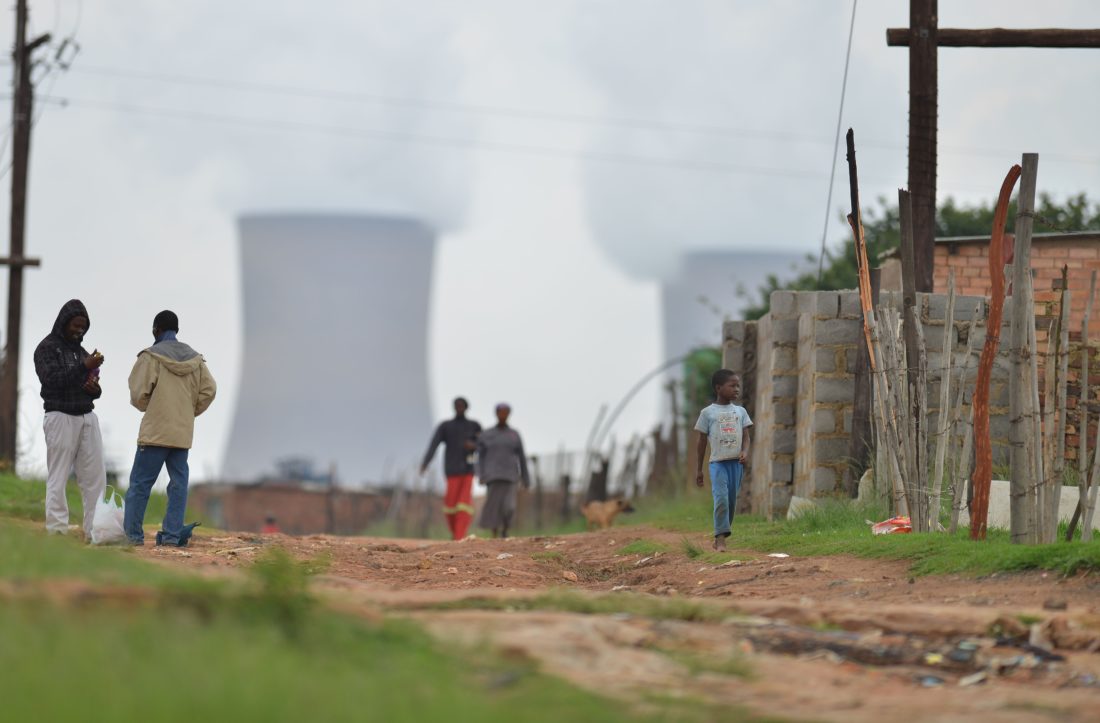
MPUMALANGA, SOUTH AFRICA – Every morning at 5:00 AM, Amina Khumalo performs a ritual of survival. Before waking her seven-year-old son, Leo, she checks a digital air-quality sensor. If the reading for PM2.5—toxic particles from nearby coal plants—is high, Leo stays home.
"In the Highveld, we don't just breathe the air," Amina says. "We wear it. And for my son, we pay for it."
Amina’s struggle is the human face of a continental crisis. This World Health Day, commemorated under the official WHO 2026 theme, "Together for health. Stand with science," leaders are finally acknowledging that pollution is an "invisible thief" of Africa’s prosperity.
The Macroeconomic Drain
The "pollution tax" is no longer a theoretical concern. Data from the World Bank and the United Nations confirms that environmental shocks and pollution-related illnesses drain between 2% and 5% of the continent’s total GDP annually.
In nations like Ethiopia, Ghana, and Rwanda, research in The Lancet Planetary Health indicates that economic output loss sits between 0.95% and 1.2% of GDP. For Amina, this isn't abstract. "When Leo is sick, I don't go to the market," she explains. "That is a day of income gone. We are becoming poorer just by breathing.". The Voices of the Stolen Harvest
The drain extends beyond the lungs and into the very soil. In the rural fields of Kaolack, Senegal, Ndiouck Mbaye, a leader in the Rural Women’s Association, walks through land choked by plastic waste. "Our livestock consume the plastic that litters the landscape," Ndiouck says. Her experience reflects the $13 billion annual loss to Africa’s agriculture and tourism sectors caused by plastic pollution.
In the heart of Accra, Ghana, Kwesi, a 19-year-old at the Agbogbloshie e-waste site, lives the "informal paradox." He burns plastic off copper wires to earn a living, while the lead-filled smoke compromises his health. "The smoke makes my chest tight, but I need to eat today," he says. Kwesi is a face of the 0.95% GDP loss Ghana faces through pollution-related morbidity . A Generation at Risk
The State of Global Air report reveals that pollution causes 1.1 million premature deaths in Africa every year and has cost children nearly 1.96 billion IQ points. By damaging developing brains, pollution is "taxing" Africa’s future labor force before they reach adulthood. Furthermore, 80% of newborn deaths related to air pollution in Sub-Saharan Africa stem from household smoke—the soot from the fires used to cook the family meal
The Blueprint for "The Africa We Want"
This crisis is precisely what the African Union’s Agenda 2063 aims to solve. The continent’s master plan for transformation targets a 7% annual GDP growth built on the pillars of inclusive and sustainable development. It mandates that cities recycle at least 50% of their waste and that 30% of farmers adopt the climate-resilient systems needed to protect the harvests of leaders like Ndiouck.
The Investment Frontier: Turning Liability into Asset
Standing with science reveals that bridging Africa's pollution gap is a massive economic opportunity. Africa’s green economy is now valued at $1.147 trillion, representing over 40% of its total GDP.
* Renewable Infrastructure: Investing in decentralized grids can eliminate coal-region pollution while fueling industrial growth.
The Circular Market: Transforming plastic waste into eco-bricks turns a $13 billion eyesore into a profitable industrial input.
Digital Health: Scaling the sensors Amina uses creates a high-growth market for data-driven health platforms.
A Future Worth Fighting For
As the sun climbs, Amina looks at her sensor. Today, it’s safe enough for school. "The scientists say that 'Standing with Science' means looking at the whole picture—our air, our water, and our pockets," Amina says. "I stand with them because I want Leo to have a future that isn't limited by the air he was born into."
World Health Day | 7 April 2026